Integrative services: the human layer
The work that makes every other therapy work harder
Oxygen and light and heat and frequency are powerful. But the body is not a machine you plug into a socket and leave running. It needs breath, movement, circulation, and attention. Our integrative services are the hands-on layer that prepares your body to receive every other therapy we offer, and keeps the gains you make between sessions.
- Breath work
- Biofeedback
- Meditation: Jersey Zen
- Myofascial release
- Sound frequency
- 5Integrated services offered
- 25+Years of experience
- ∞Infinite possibilities
- 8Solfeggio frequencies
Our philosophy
Integration is not an add-on. It is the point.
Every service we offer works better when the others are working too. That is the entire premise of this facility, and the integrative services on this page are what hold it all together.
You can breathe pure oxygen at 3.0 ATA for an hour. But if your diaphragm is weak, your fascia is locked, and your blood can't circulate properly to the tissue that needs it, you are leaving most of that oxygen on the table. The same is true of light therapy, PEMF, and every other modality we offer. The limiting factor is often not the therapy itself; it is the body's ability to receive and distribute what the therapy is delivering.
Breath work improves the oxygen saturation your cells can reach during and after every session. Myofascial release removes the adhesions that restrict blood flow to the very areas you are trying to oxygenate. Biofeedback teaches your body to direct circulation where it is needed most. Meditation and guided imagery increase blood flow to specific brain regions while you are in the chamber or under the panels. These are not side offerings. They are the infrastructure that makes everything else work at its highest level.
Our clinicians have over 25 years of experience in these disciplines. This is not a spa menu of relaxation options. It is a clinical toolkit applied with precision. Whether you are recovering from a TBI, rebuilding after surgery, managing chronic pain, or simply trying to operate at your best, the integrative layer is where your protocol becomes truly holistic.
Service 1
Breath work
You can live weeks without food and days without water. Try five minutes without air. Breath is the foundation of everything we do here, and most people have never been taught to do it properly.
Breathing is a skill. Like any physical skill, it responds to instruction, practice, and steady development. Most people breathe shallowly, through their chests, using accessory muscles that were not designed for the job. That pattern limits oxygen uptake, increases nervous system tension, and restricts the efficiency of every other therapy they receive.
We start on day one with proper diaphragmatic breathing, combined with posture correction and spinal and rib mobility work that creates the structural space for a full breath. As you develop, the techniques advance. We work through methods made well known by Wim Hof and Max Strom, breathing protocols that range from deeply relaxing to physically demanding, all with a specific purpose: maximize the oxygen your cells can absorb and retain long after you leave our facility.
Breath work inside the HBOT chamber is particularly powerful. When you combine correct breathing mechanics with the dissolved oxygen at therapeutic pressure, the cellular saturation you reach is meaningfully higher than either alone. Your clinician guides you through the techniques during your dive, and the skills you develop carry into every part of your daily life and training.
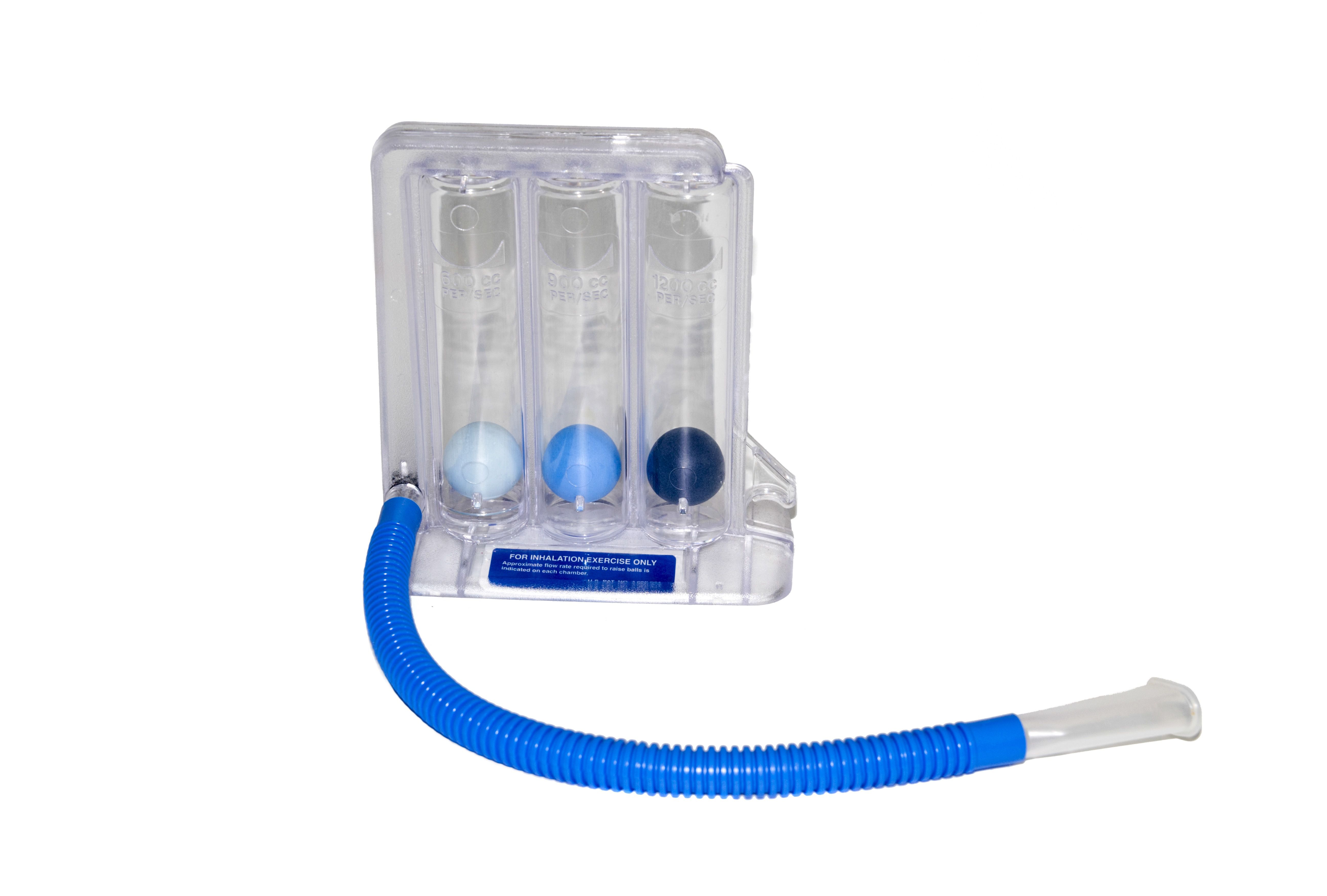
Diaphragmatic breathing and posture
The foundation. Proper activation of the diaphragm combined with spinal and rib mechanics that create the structural capacity for a full, efficient breath. Where every protocol begins.

Wim Hof Method
Controlled hyperventilation followed by breath holds, shown to influence the autonomic nervous system, reduce inflammation, and dramatically improve cold tolerance and stress resilience. We guide you through the full protocol safely and progressively.
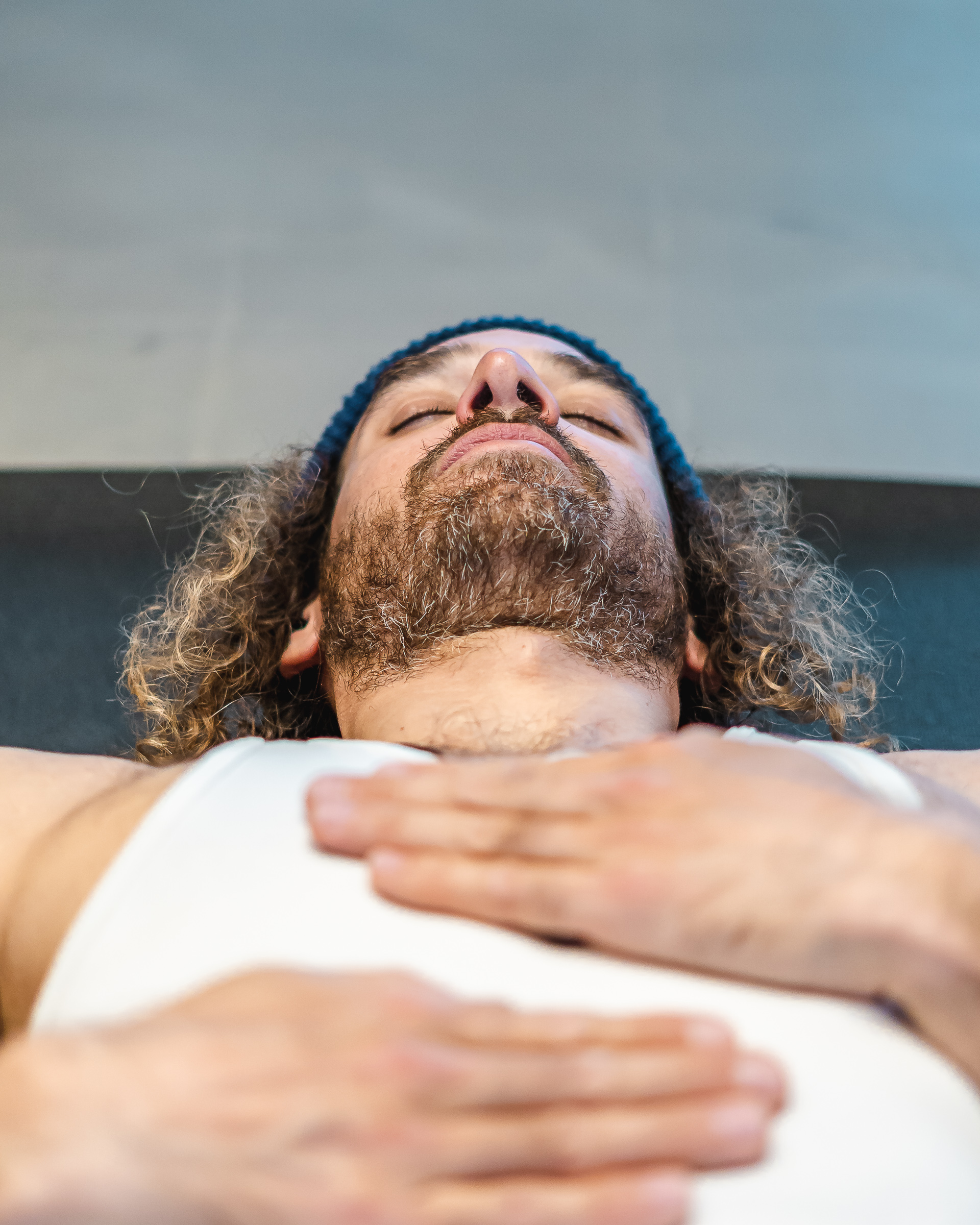
Max Strom breath work
A more meditative, calming approach that uses slow, deliberate breathing patterns to release stored tension, improve sleep, and shift the nervous system from chronic stress into real recovery mode.
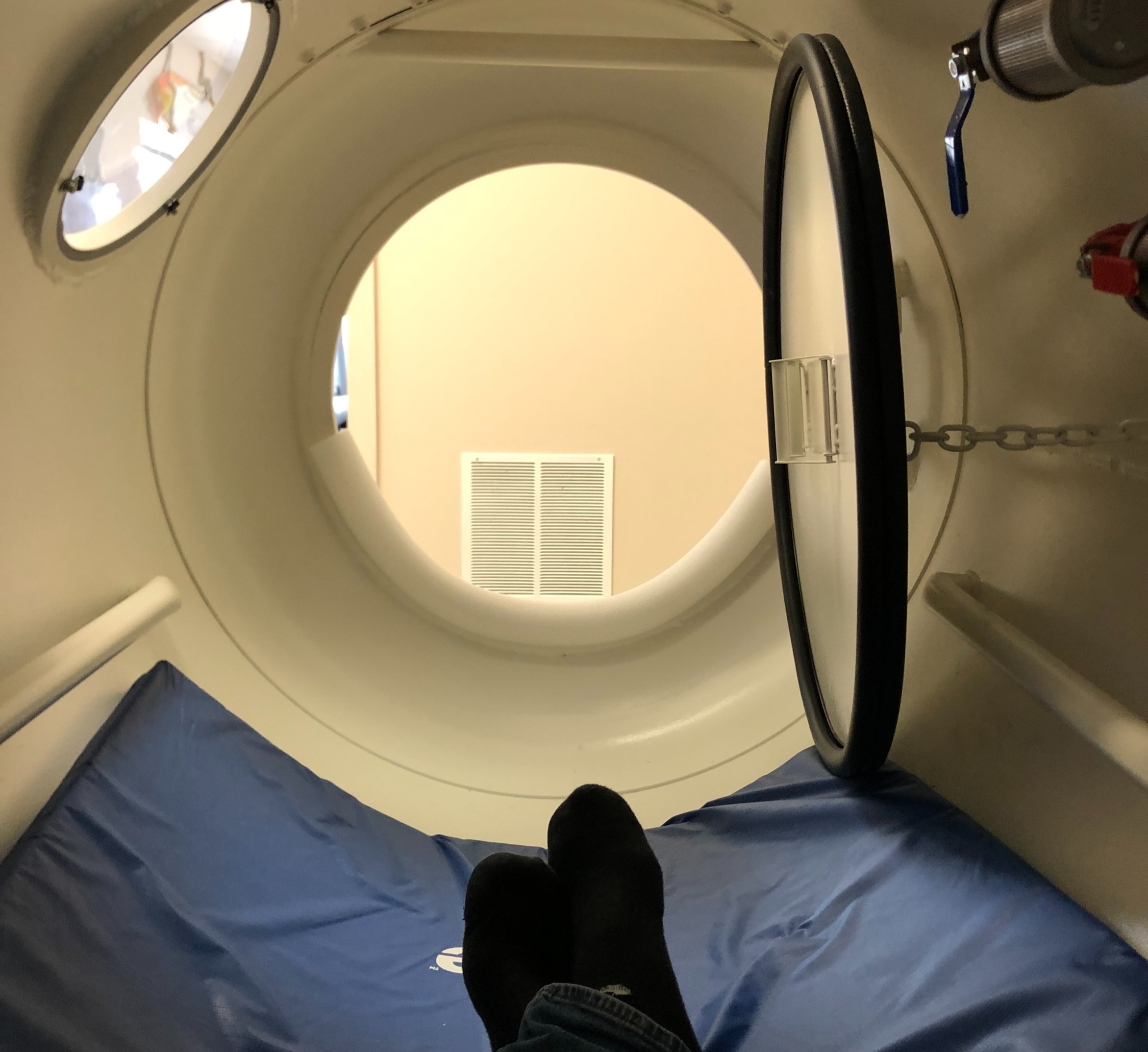
In-chamber breath work
Applied during HBOT sessions to maximize oxygen saturation at pressure. Your clinician guides you in real time, the most direct way to get more out of every dive you do.
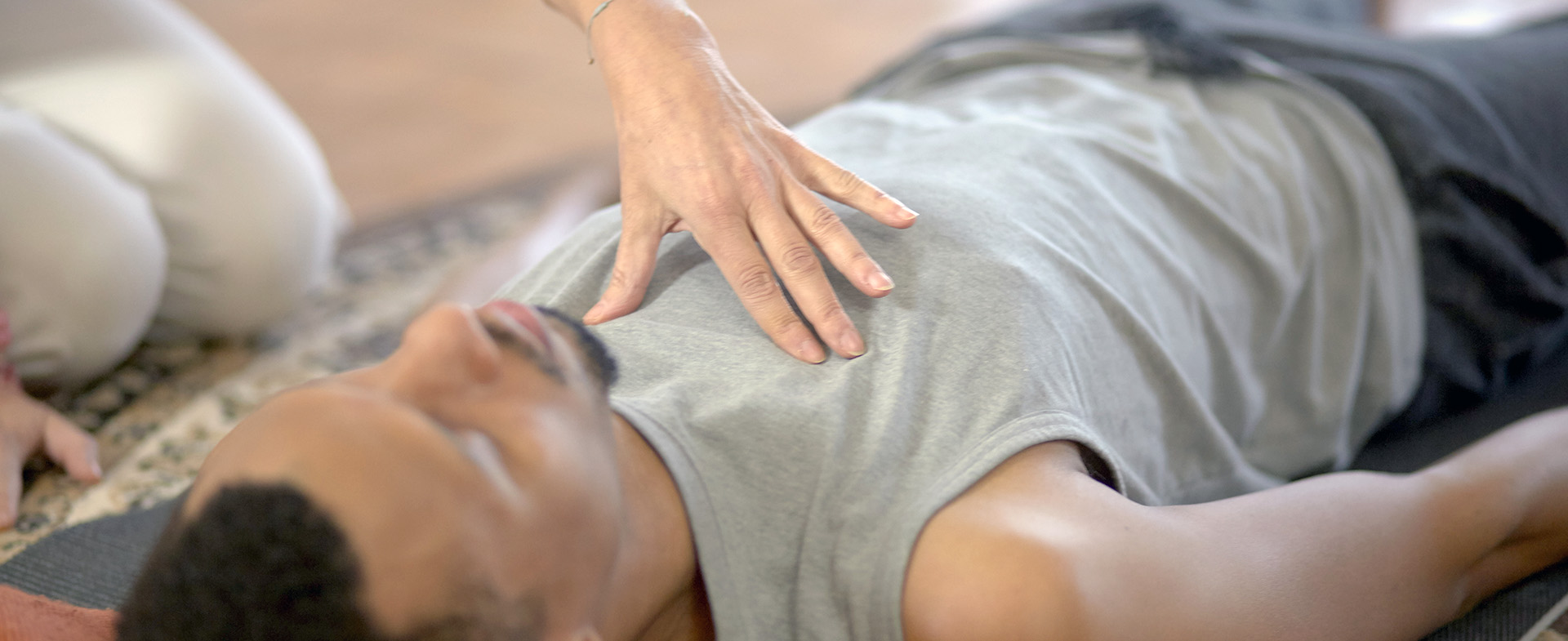
One-on-one guidance and home practice
Individual instruction plus video and audio guides you can take home and practice between sessions. The goal is independence: a skill set you own for life, not a service you depend on forever.
Service 2
Meditation, the Jersey Zen way
Relaxation is not a luxury here. It is a clinical tool. When your mind is calm, blood flow improves, cortisol drops, and your body puts more energy into the repair work every other therapy here is trying to support.
We approach meditation the way we approach everything else at Integrated Hyperbarics: practically, without pretension, and with a specific biological goal in mind. Guided meditation increases blood flow to targeted regions of the brain. Mental imagery activates the same neural pathways as physical movement. Binaural beats directly influence brainwave states, reducing anxiety and blood pressure and creating the kind of deep relaxation that speeds recovery.
Jersey Zen is our version of this: approachable, unpretentious, effective. You can balance our Zen stones and let your mind go quiet. You can follow a guided meditation on your device from our own curated library. You can listen to binaural beats at the frequency that matches your condition and goals. You can follow visual imagery designed to increase blood flow to the creative and healing centers of the brain. None of it requires you to sit cross-legged on a mat or subscribe to anything. It just requires you to show up and let it work.
Meditation is particularly powerful during HBOT and PBMT sessions, when your cells are already in a heightened state of receptivity. We guide clients through breath work and visualization during their dives, and the combination of physical and mental focus produces outcomes that neither achieves alone.

What we offer
All of our meditation tools are available during HBOT, PBMT, sauna, and PEMF sessions, or as standalone practices in our dedicated space. Everything is curated, clinically informed, and available on our Meditations and Binaural Beats page.
- Guided meditation, clinician-led or audio/video guided, tailored to your goals
- Binaural beats at specific Hz frequencies to match your treatment protocol, from delta rest to gamma focus
- Solfeggio frequency audio, 396 Hz through 852 Hz, for chakra and frequency-based relaxation
- Visual imagery videos designed to increase blood flow to creative and healing brain regions
- Zen stone balancing, a hands-on, focused practice for those who find traditional meditation difficult
- Uplifting audio: speeches, music, and guided programs for motivation and mental clarity
Service 3
Myofascial release
The best way to move oxygen and energy through the body is to remove the adhesions that are blocking it. Fascia doesn't show up on an X-ray, but it is often the reason your recovery has stalled.
Fascia is the connective tissue web that surrounds every muscle, organ, nerve, and blood vessel in your body. When it is healthy, it is fluid and permeable, letting blood, oxygen, and nerve signals move freely. When it is injured, inflamed, or chronically stressed, it tightens and sticks, creating restrictions that compress blood vessels, trap nerve tissue, and physically block the circulation healing depends on.
You can saturate your blood with oxygen in the HBOT chamber, energize your mitochondria with PBMT, and PEMF your nervous system into a receptive state, but if the fascia around the target tissue is locked, none of it reaches where it needs to go. Myofascial release is what opens the door. Our clinicians apply it before HBOT and PBMT sessions to maximize the reach of whatever therapy follows, and the difference in outcome is measurable.
We use a full toolkit of release techniques (hands-on manual work, instrument-assisted soft tissue mobilization, suction cupping, massage guns, and foam rolling) applied by clinicians with deep experience in finding where restriction is actually happening versus where the pain is showing up. And no, we will not leave you looking like a cupping disaster. We know what we're doing.
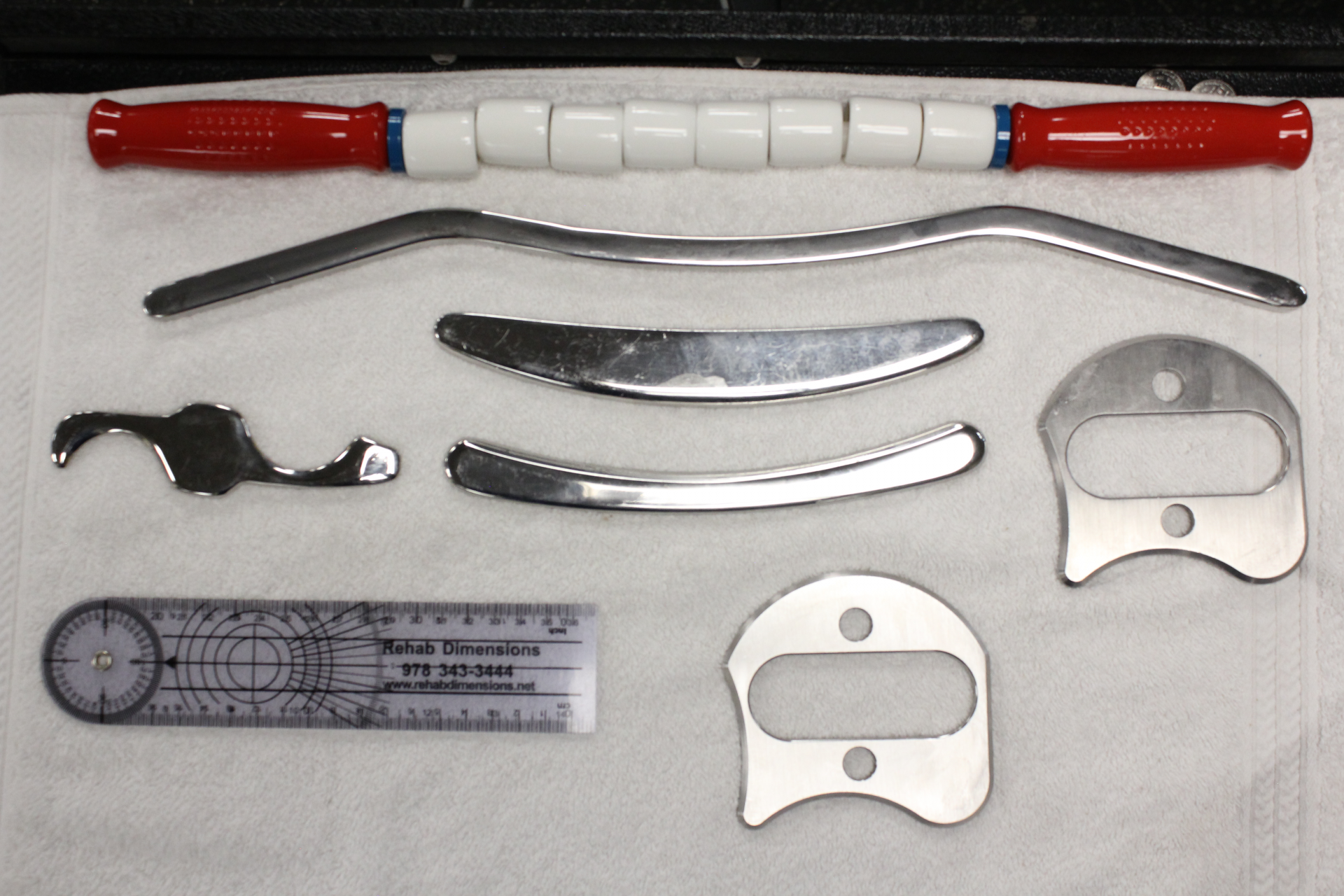
Gua sha tools
Precision scraping tools that detect and release fascial adhesions along muscle fibers and tendon sheaths, particularly effective for chronic tendon problems, post-surgical scar tissue, and nerve entrapment.
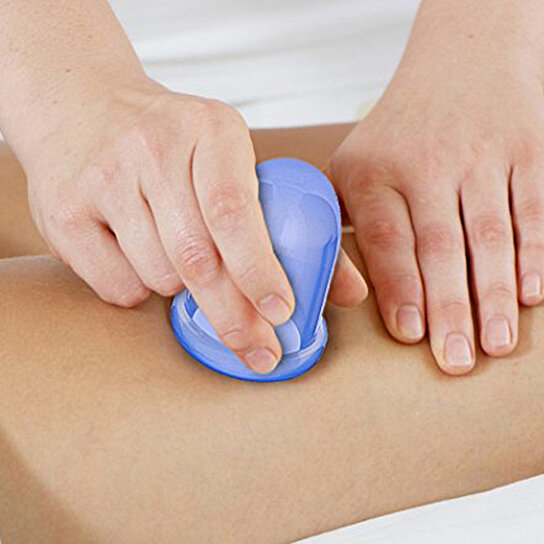
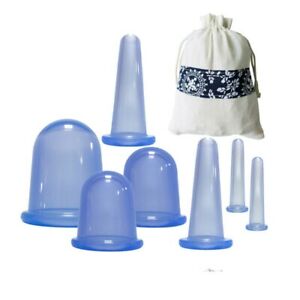
Suction cupping
Silicone cups create negative pressure that lifts the fascia away from underlying tissue, decompressing blood vessels, improving local circulation, and releasing the kind of deep restrictions direct pressure cannot reach.
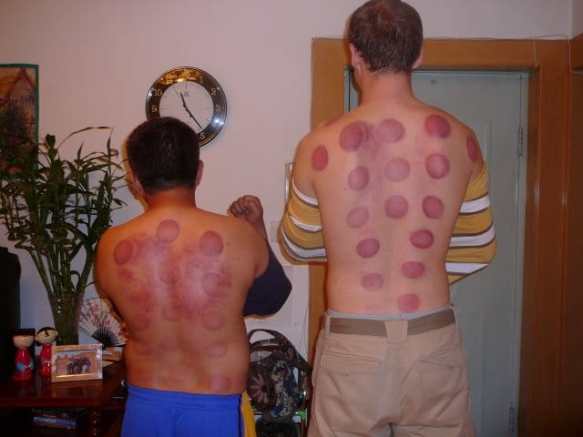
We promise not to make you look like this. This is not correct technique.
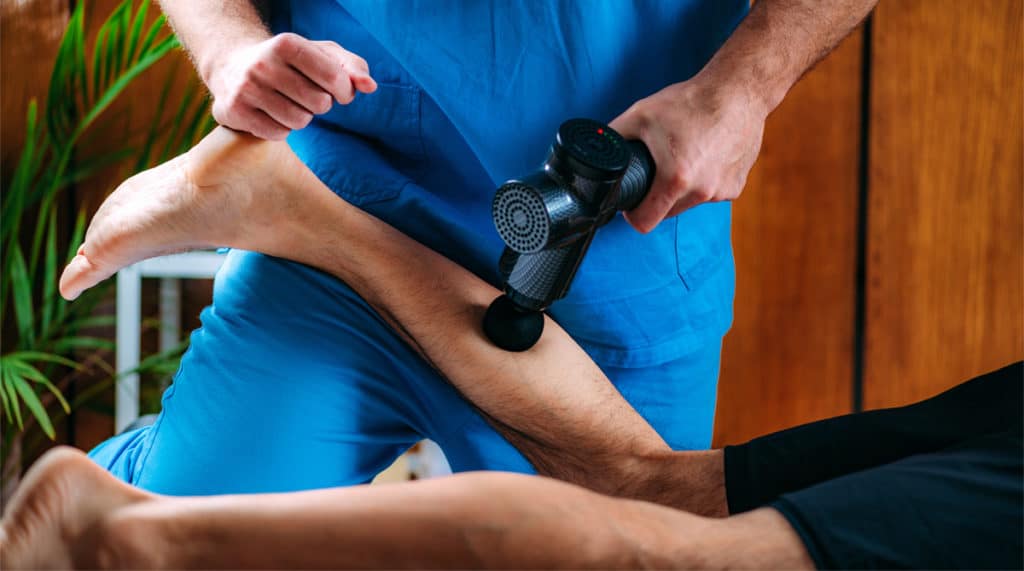
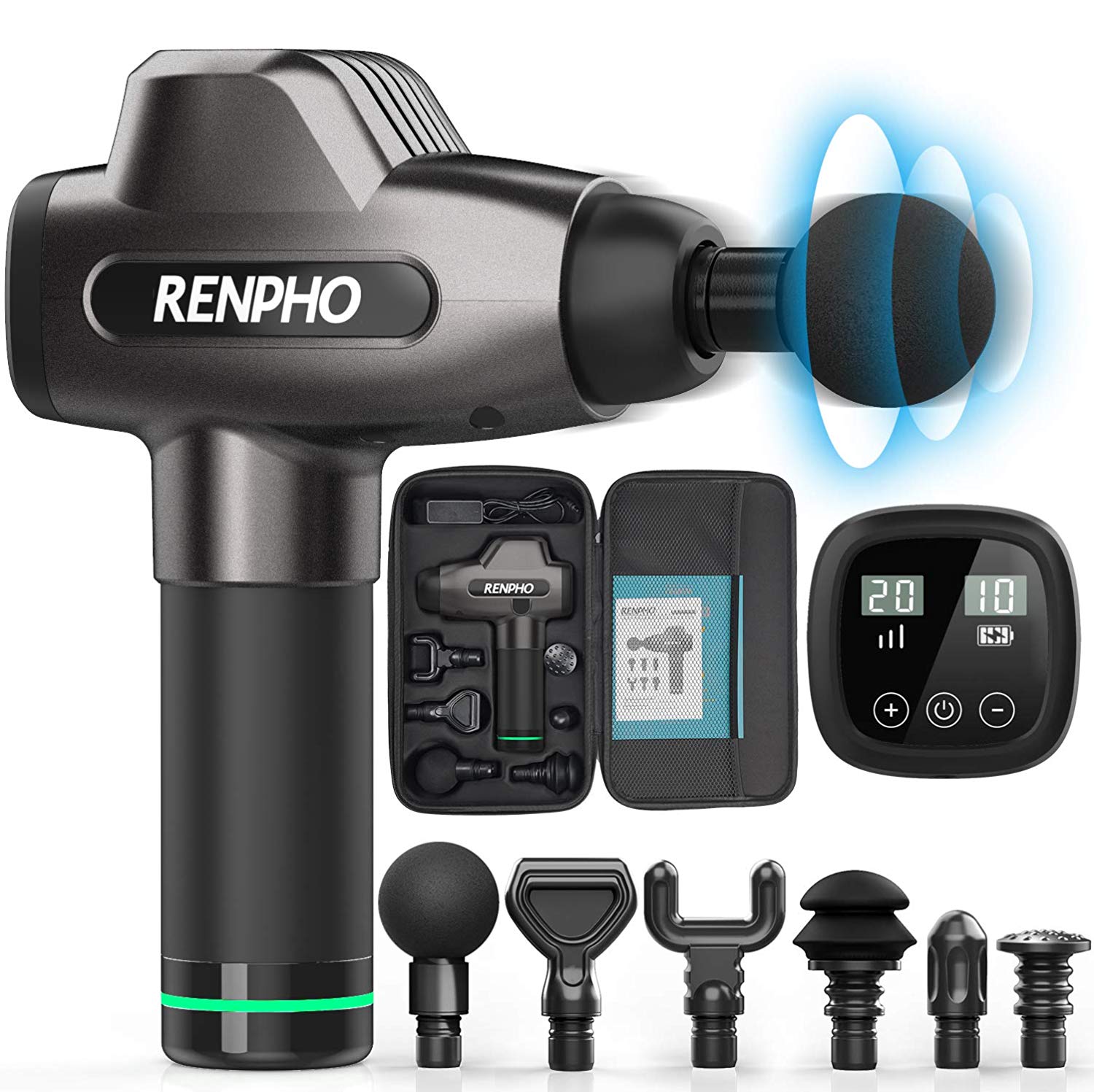
Percussion massage
High-frequency percussive therapy with professional massage guns penetrates deep into muscle tissue, reducing tone, breaking up adhesions, and speeding the removal of metabolic waste from tissue after exercise or injury.
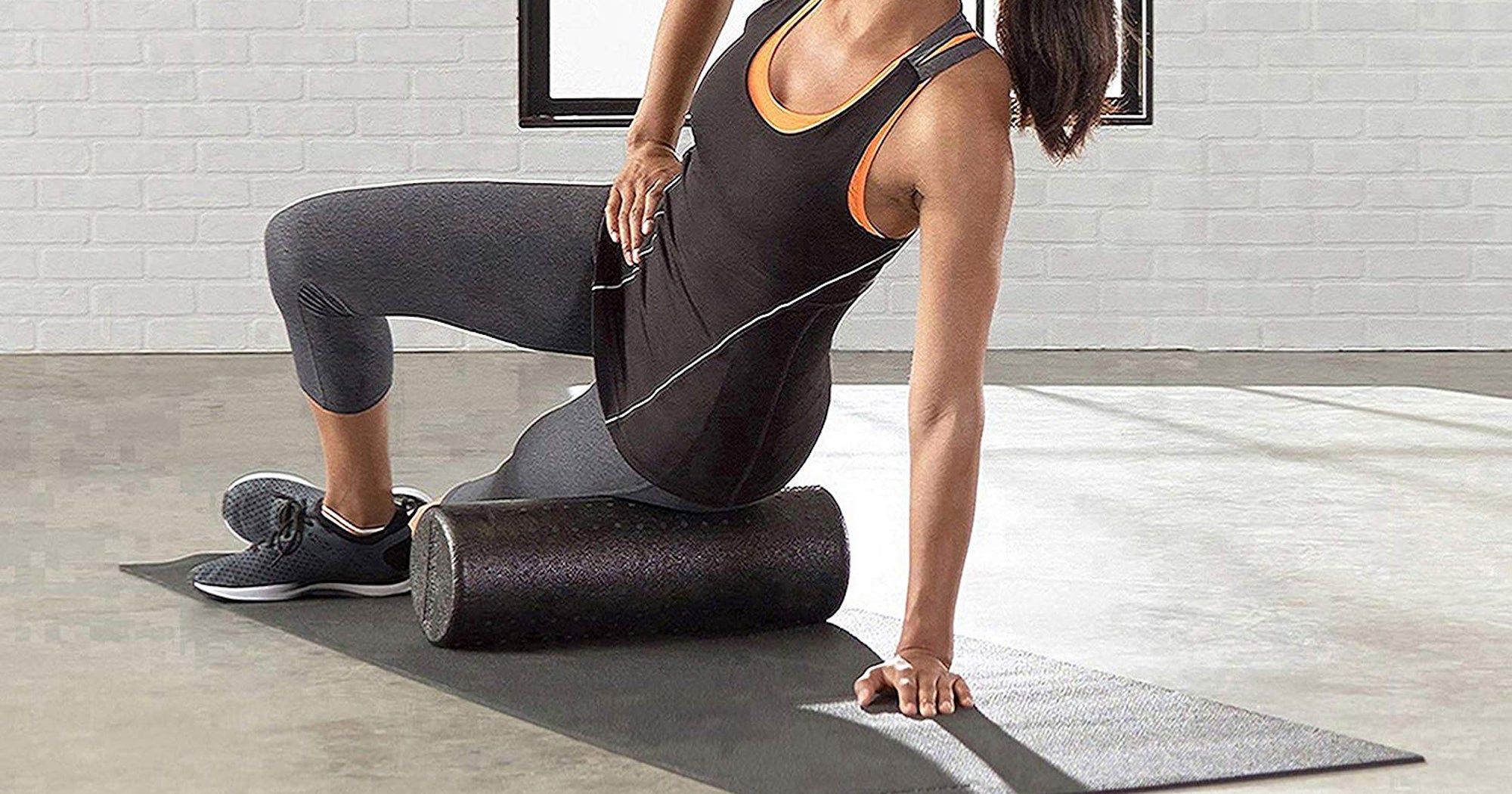
Foam rolling and manual techniques
Guided foam rolling combined with hands-on manual release, teaching you the self-care techniques that maintain the work between sessions, while our clinicians address the deeper restrictions you can't reach on your own.
Applied before or after HBOT and PBMT
Myofascial release before your dive or light session means the oxygen and light you are about to receive have a clear path to the tissue that needs them. Applied after, it drives the oxygenated blood deeper into the areas in need. This sequencing is not a coincidence; it is how we get the most out of every session you do here.
Service 4
Biofeedback
Your body is already sending signals. Biofeedback makes those signals visible, so you can learn to control what most people assume is involuntary.
Biofeedback uses sensors to measure physical activity (muscle tension, blood flow, nerve firing patterns, movement coordination) and feeds that information back to you in real time through audio and visual displays. What sounds like a technology demo is actually one of the most powerful rehabilitation tools available: when you can see or hear what your body is doing, you can learn to change it.
Our clinicians have over 20 years of experience applying biofeedback in clinical settings. The applications here are specific and targeted. For motor rehabilitation after a stroke, surgery, or TBI, biofeedback teaches the nervous system to rebuild the movement patterns injury disrupted. For performance (athletes, musicians, anyone whose work demands precise motor control), it provides objective feedback that training alone cannot. For pain and spasm, it identifies the compensating tension patterns that keep the problem going and guides the body toward release.
Used after HBOT and PBMT, when your cells are oxygenated and your mitochondria are energized, biofeedback-guided movement training is extraordinarily effective. You are teaching a nervous system that is already primed to learn.
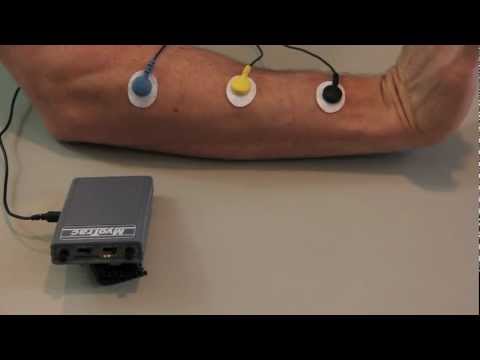
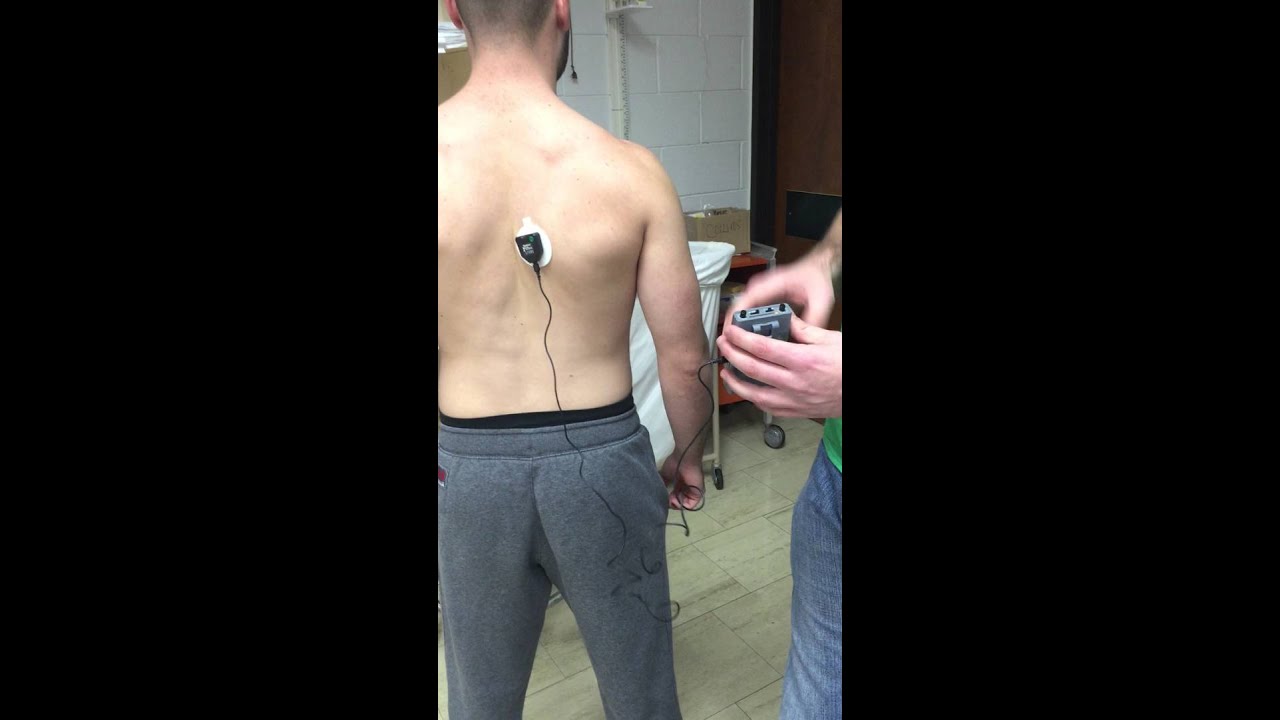
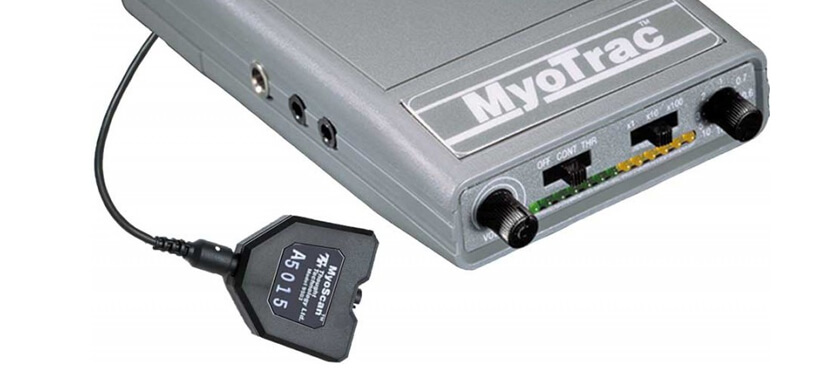
Motor rehabilitation
Movement retraining after a stroke, TBI, or surgery. Audio and visual feedback guides the nervous system back to efficient, coordinated movement patterns that injury or disease disrupted.
Spasm and tension reduction
Identifies the specific muscles and patterns holding chronic tension, and gives you the real-time feedback needed to consciously release them. Particularly effective for chronic neck, back, and shoulder pain.
Sport performance
Our handheld device gives audible feedback during movement, helping athletes find and correct inefficiencies in their mechanics that are invisible during normal training.
Blood flow direction
One of biofeedback's most powerful uses: teaching you to consciously direct more circulation to specific areas of the body. Used together with breath work, meditation, and PBMT for targeted tissue recovery.
The integration
A day at Integrated Hyperbarics
Here is what a fully integrated session looks like in practice: the sequencing that turns individual therapies into a protocol that is greater than the sum of its parts.
Sample day: general wellness
- We open the session by releasing the fascial restrictions that would otherwise block circulation to the target tissue. Suction cups, gua sha, and percussion for 10–15 minutes make everything that follows more effective.
- Far infrared heat, or PEMF at 7–8 Hz, raises circulation, relaxes the nervous system, and warms the tissue. The body is now primed: open, well supplied with blood, and receptive to what comes next.
- Red and near-infrared panels charge the mitochondria in the warmed, open tissue. ATP production rises. The Neuradiant 1070 can run at the same time for neurological clients.
- Into the chamber. Binaural beats through headphones at a matching frequency. Guided breath work from your clinician. Dissolved oxygen saturating every tissue the previous steps just opened up.
- After HBOT, when the nervous system is oxygenated and receptive, biofeedback-guided movement retraining is at its most effective, teaching a brain that is primed to learn exactly what you need it to do.
- Close the session with grounding, guided meditation, or binaural rest.
Cortisol drops. The calming side of the nervous system takes over. Everything you just put in has the best possible environment to do its work.
Sample day: stress and anxiety
- Start in the HBOT chamber at 1.3 ATA, the mild-pressure sweet spot for neurological calming, with green light (510–560nm) for its soothing, anti-inflammatory effect. Green is the one wavelength that does not worsen light sensitivity, making it ideal for the nervous system imbalance behind most anxiety.
- Solfeggio frequencies at 396 Hz or 417 Hz play through headphones, the frequencies associated with releasing fear and facilitating change.
- Coming out of the chamber, the far infrared sauna at 120–130°F triggers a calming shift and an endorphin release that builds on the calm already in place.
- Close with PEMF at 7–8 Hz underneath the red/NIR panels, with electromagnetic and light signals restoring cell membrane potential and mitochondrial function together.
Cortisol drops measurably. Most clients leave feeling like they slept twice.
Sample day: dementia and cognitive recovery
- HBOT at 1.3 ATA with guided diaphragmatic breath work throughout the dive, maximizing dissolved oxygen delivery to oxygen-hungry brain tissue.
- Coloring books or mandala work during the session keep the hands engaged and stimulate the right hemisphere's creative centers, while 40 Hz gamma audio, the range specifically studied for Alzheimer's, plays through headphones. Oxygen, focused attention, and gamma stimulation together create a neurologically active environment inside the chamber.
- Immediately after, the Neuradiant 1070 helmet delivers 1070nm light directly to the quadrants identified in the qEEG brain map: frontal for mood and executive function, posterior for motor coordination.
- Then into the gym for 20–30 minutes of moderate cardio, one of the most evidence-supported ways to grow new brain cells and raise BDNF. The brain that just received oxygen and light is now bathed in exercise-driven growth factors.
Consistency with this protocol produces cumulative neurological gains that are measurable over weeks.
Sample day: post-marathon and performance recovery
- Begin on the PEMF mat under the red and near-infrared panels right after the event or hard training day, while inflammation is still acute and the tissue is most responsive. PEMF at 10–15 Hz restores cellular energy while red light addresses surface muscle and skin damage, and NIR reaches the deep tissue, tendons, and joints that took the most punishment.
- Into the HBOT chamber next at 2.0 ATA, the mid-range pressure for musculoskeletal recovery, where dissolved oxygen floods the lactic-acid-saturated tissue and starts rebuilding damaged small blood vessels.
- From the chamber directly into the far infrared sauna at 120°F. The raised core temperature mobilizes the metabolic waste the HBOT just loosened, flushing it out through sweat.
- Close with 20 minutes of guided stretching while the tissue is warm, pliable, and oxygenated, the single best window for mobility work in the whole recovery cycle.
Athletes who follow this sequence consistently report returning to full training 30–50% faster than without it.
Sample day: immune support and detox flush
- Open with targeted myofascial release to the lymphatic drainage pathways (neck, armpits, and groin), priming the lymphatic system by hand before the therapies that follow give it anything to clear.
- The far infrared sauna at 140°F drives the deepest sweat of the sequence, mobilizing heavy metals and environmental toxins stored in fat tissue.
- HBOT at 2.8 ATA follows. High pressure creates an oxygen environment directly toxic to anaerobic bacteria and pathogens, while mobilizing stem cells from bone marrow and rebalancing the gut microbiome. The immune response at this pressure is distinct from lower protocols: white blood cell activity increases, natural killer cell function improves, and the oxygen-rich environment is hostile to organisms that thrive in oxygen-poor tissue.
- Close with red and NIR light therapy aimed at the lymph node regions and gut, supporting the cellular cleanup the HBOT just started and speeding the removal of debris now in circulation.
Run this sequence at the first sign of illness, seasonally for prevention, or as a dedicated detox protocol 4–6 times a year.
Let's build your integrated protocol
Tell us where you are in your journey and what you're trying to accomplish. We'll put together the combination that makes the most sense, and teach you the skills that extend it beyond your time here.